
Sohrab Vazir
Consultant | Founder | Global Citizen
How to Write an Innovator Founder Visa Business Plan: The Complete Guide

The Innovator Founder visa business plan is not a formality. It is the framework of the entire application.
Why the Innovator Founder visa business plan is crucial? Before you touch a Home Office form, before you think about biometrics or English language tests, your business plan goes in front of an endorsing body. And if they say no, the route is closed. Full stop. No endorsement means no visa.
Most applicants understand this in theory. Fewer understand what it actually means in practice: that the quality, structure, and evidence in your business plan will either open or permanently shut the door to the UK Innovator Founder Visa route. And fewer still understand that the business plan matters not just for getting the endorsement, but for keeping it.
This guide covers everything: what goes in the plan, why each section matters, how to approach it as a founder, the structural and practical mistakes that kill applications, and what happens to your plan after endorsement is granted.
What Is the Innovator Founder Visa Business Plan?
The Innovator Founder Visa (IFV) replaced the old Innovator and Start-up visas in April 2023. It is the UK’s primary immigration route for overseas entrepreneurs who want to establish an innovative business in the UK. Unlike many business visas, it carries no minimum investment threshold. What it requires is a credible, well-evidenced business plan, assessed against three criteria that endorsing bodies apply to every single application.
Those three criteria are: Innovation, Viability, and Scalability.
Endorsing bodies assess your business plan against each criterion in turn. Every section you write, every claim you make, every projection you include feeds back into one of those three tests. If the plan fails on any one of them, endorsement is refused.
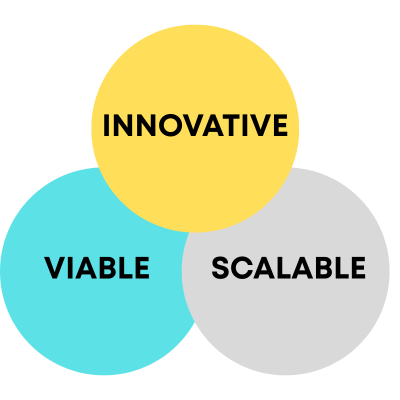
The Three Core Criteria Explained
1. Innovative
Your business idea must be genuine and original. It must meet a new or existing market need and/or create a clear competitive advantage. This does not mean you need to have invented something from scratch. But it does mean you cannot run a standard franchise, a straightforward reselling operation, or a business indistinguishable from thousands of others already operating in the UK.
Endorsing bodies want to see differentiation. What does your business do that nothing else does, or does better, cheaper, faster, or for an underserved market? You must clearly articulate that differentiation and support it with evidence: market research, competitor analysis, pilot data, patents, letters of intent, or user validation.
2. Viable
Viable means realistic and achievable given your available resources. The endorsing body will look at whether your financial projections are credible, whether evidence grounds your assumptions, and whether your funding position is consistent with your projected capital requirements.
There is no minimum funding threshold. But if your plan projects £500,000 in first-year operating costs and you have £30,000 available, the viability test fails on its face. Your plan needs internal consistency. If your revenue assumptions in one section contradict your cost structure in another, assessors will spot it.
Viability also covers your capability as a founder. Endorsing bodies assess whether you have, or are actively developing, the skills, knowledge, experience, and market awareness to actually run this business.
3. Scalable
The IFV is not for lifestyle businesses. The route exists to attract founders building businesses with genuine growth potential, nationally and into international markets. Your plan must demonstrate structured planning for scale. Evidence of job creation, a pathway to UK and international market expansion, and a business model that geography, the founder’s own time, or a fixed customer base cannot permanently cap.

Who Assesses the Business Plan?
An endorsing body is an organisation the Home Office has approved to assess IFV applications. There are a small number of them, not a long list of universities or accelerators. Each has its own assessment process, but all apply the same three core criteria.
You must apply to an endorsing body before you apply to the Home Office. The endorsing body reviews your plan, conducts an interview, and either issues an endorsement letter or declines. You then submit that letter, containing a unique reference number, to the Home Office as part of your visa application.
The three current endorsing bodies, Innovator International, Envestors, and UKES (UK Endorsing Services), each publish guidance and proposed structures on their websites. Read their materials before you write a single word of your plan. Envestors does not accept business plans directly; you answer their questions instead. The other two offer structural templates worth reviewing. Use them.
What do the endorsing bodies look for?
I have directly interviewed 3 endorsing bodies to bring transparency around what they expect to see in applications. The videos below are excellent (and free!) resources to hear directly from them.
Step One: Validate Your Idea Before You Write Anything
This is the step most applicants skip entirely, and it is the most important one.
Spending months writing a business plan for an idea that does not qualify for endorsement is pointless and expensive. The endorsement fee, the time invested, the professional support costs, all wasted if the underlying idea fails the three criteria at first assessment. Yet a significant proportion of applicants do exactly this.
Before you commit to writing the business plan, validate your commercial proposal. Assess your idea against the innovation, viability, and scalability criteria with objectivity. Validate the problem, the pain point, the solution, and the commercial model.
Ask yourself these questions at validation stage:
- Is my idea genuinely original, or does it replicate something already well-established in the UK market?
- Is there a real, documented market need, or am I assuming demand exists?
- Is my business model commercially realistic with the resources I have or can access?
- Does my business have a credible path to scale, or is it structurally limited in size?
- Am I the right person to execute this, do I have relevant skills or a credible plan to acquire them?
If the honest answer to any of these is uncertain or negative, the plan needs work before it reaches an endorsing body. Addressing gaps at this stage costs far less than receiving a refusal later.
How I help founders validate their idea?
Through an IFV evaluation call, I assess your business idea against the endorsement criteria.
How Long Should the Business Plan Be?
There is no strict minimum length. The guidance specify what the plan must demonstrate, not how it must look. Quality and evidence always outperform length. A 50-page plan full of unsubstantiated claims is weaker than a 30-page plan with rigorous market data and coherent financial projections.
Every page should earn its place by contributing to one of the three criteria. If a section does not advance the case for innovation, viability, or scalability, cut it or restructure it.

The Essential Sections of an Innovator Founder Visa Business Plan
This is not a complete list of the sections but an overall guidance on the key framework of the business plan.
Executive Summary (1 to 2 pages)
This section comes first and sets the frame for everything that follows. A weak executive summary creates doubt that the rest of the plan has to fight against. A strong one signals that the founder understands their business, their market, and the criteria under assessment.
Cover: the problem you are solving, your solution, what makes it innovative, the market opportunity, your business model, your current traction (if any), and your financials. Do not pad it. Every sentence should carry weight.
The Problem and Opportunity
Describe the problem before you describe your product or service. Endorsing bodies are not investors in the traditional sense, but they think in similar ways: is there a real and significant problem here? Is the market large enough to matter? Does data or real customer behaviour validate the need?
Cite credible sources, industry reports, government data, academic research. Quantify the problem where possible: how many people or businesses does it affect, what does it cost them, and why have existing solutions failed to address it adequately?
Your Solution and Innovation
This section explains what your business actually does, and more importantly, what makes it genuinely different. Be specific. Vague language about disruption or transformation without substance is exactly what experienced endorsing body assessors have seen hundreds of times. It does not work.
If your innovation is technological, explain it in clear terms without assuming technical knowledge on the part of the reader. Alternatively, if it is operational, explain the model. If it is market-positioning, explain the gap and why you are placed to exploit it.
Differentiate clearly from existing competitors. A simple competitor matrix helps here, not to dismiss competitors, but to show you understand the landscape and can articulate your specific position within it.
Market Analysis
The market analysis must be credible, specific, and tied to your business. Generic industry statistics disconnected from your actual addressable market are a common weakness.
Establish three things:
Total Addressable Market (TAM): The overall market size — global or national — for the category your business operates in.
Serviceable Addressable Market (SAM): The portion of that market your business could realistically target given its model, geography, and stage.
Serviceable Obtainable Market (SOM): The realistic share you aim to capture in your forecast period, explained by your go-to-market strategy.
Do not cite TAM alone as evidence of demand. Endorsing bodies want a credible path from your starting point to market penetration. That requires SAM and SOM grounded in realistic assumptions.
Business Model and Revenue Streams
Explain exactly how your business makes money. Be specific about pricing, transaction structures, subscription models, licensing arrangements, or whatever is relevant to your model. If you have multiple revenue streams, explain each one separately and project their relative contribution to total revenue.
Keep the business model section internally consistent with your financial projections. If your model relies on enterprise contracts with 90-day sales cycles, your year-one revenue projections should not assume dozens of closed deals in month one.
Go-to-Market Strategy
How do you acquire your first customers — and then scale that acquisition? This section often separates plans with genuine commercial thinking from plans that are essentially product descriptions dressed up as business plans.
Cover your target customer segments, how you reach them (channels), your sales process, your initial pricing strategy, and your first-market priorities. If you have existing traction — pilot customers, letters of intent, beta users, revenue — reference it prominently here.
Also address your entry into the UK market specifically. You are applying to operate a business in the UK. The endorsing body wants to see that your go-to-market thinking reflects UK market realities: the regulatory environment, customer behaviour, and competitive dynamics.
Financial Projections
Three-year projections are standard. Some plans extend to five years. The projections need to cover:
- Revenue forecasts broken down by stream and customer segment
- Cost of goods sold (COGS) or cost of service delivery
- Operating expenses: staffing, technology, office, marketing, legal, and professional services
- Capital expenditure if applicable
- Cash flow projections
- Profit and loss summary
- Funding requirements and use of funds
State and explain every significant assumption underlying the projections. If you are projecting 200% year-on-year revenue growth, the endorsing body needs to understand why that is realistic — based on market size, conversion rates, pipeline, or comparable growth trajectories in similar businesses.
Endorsing bodies do not expect perfection. They know projections in early-stage businesses carry uncertainty. What they assess is whether the projections are reasoned, internally consistent, and grounded in a credible understanding of the business.
Funding and Use of Funds
State clearly what funding you have or are seeking, where it comes from (or is expected from), and precisely how you will deploy it. If you are self-funding, provide evidence of available funds. If you are raising investment, explain the stage, the likely investors, and your timeline.
Do not vaguely reference “seeking investment” without explaining how you will secure it. If your business model requires £300,000 to reach the next milestone and you do not currently have it, explain credibly how you will raise it — and on what timeline. Without that explanation, the viability test is at risk.
Scalability and Growth Plans
This section directly addresses the scalability criterion. Show that your business has the architecture for growth: a model that does not require the founder’s individual time to scale, a market that supports expansion, and a plan for growing beyond an initial customer base or geography.
Address the following specifically:
- Job creation: which roles you will hire, at what stages, and why
- UK market expansion: from an initial region or vertical to national reach
- International market potential: even if not immediate, the plan for eventual international growth should be credible
- Scalable technology, operations, or processes that enable growth without proportional cost increases
If you are building a tech platform, show that your unit economics improve at scale — lower customer acquisition cost, higher lifetime value, increasing margins. This directly supports the scalability criterion.
Founding Team
Endorsing bodies assess you as a founder, not just your idea. The team section should establish that you have the background, experience, and skills to execute this plan.
Be honest and direct about your credentials. If you have directly relevant experience, lead with it. In contrast, if your background is adjacent rather than directly applicable, explain how it equips you for the specific challenges of this business. If there are clear gaps in the founding team, acknowledge them and explain how you will address them — through hires, advisors, or partnerships.
With teams, if you have co-founders, each one must secure their own individual endorsement letter. Each co-founder’s plan should reflect their specific contribution and role.

The Critical Point Most People Miss: The Business Plan Does Not End at Endorsement
This is arguably the most underappreciated aspect of the entire IFV process, and it has direct consequences for how you write the plan.
After endorsement is granted, you will have structured checkpoint meetings with your endorsing body at 12 months and again at 24 months. They will assess your progress at those meetings. Progress against what benchmark?
Against your original business plan. Every goal, milestone, financial objective, and product development target you committed to in the plan becomes the standard against which your actual results are measured. If you set a target of 50 paying customers by month 12 and have 8, that is a conversation you will need to have with your endorsing body. If revenue projections were significantly missed without a credible explanation, the endorsing body has the right to withdraw endorsement.
This changes how you should set targets. The temptation — particularly for ambitious founders — is to set aggressive, aspirational numbers to impress the assessor. This is exactly the wrong approach. Inflated projections that look impressive at endorsement stage become liabilities at the 12 and 24-month checkpoints.
Set targets that are genuinely achievable. If you can justify a target and explain the strategy that gets you from A to B, that target belongs in the plan. If you are projecting a number because it sounds good, remove it.
The goal is not just to get the endorsement. It is to keep it.
Six Practical Tips for Writing the Innovator Founder Visa Business Plan
Beyond structure and content, how you approach the writing process matters. Having reviewed over 150 business plans and written a plan personally that the Home Office approved under a predecessor visa route, here are six points that consistently separate strong plans from weak ones.
1. Validate Before You Write
Do not invest months of time and money in a plan for an idea that does not qualify. Validate the commercial proposal against the three criteria first. Identify the gaps. Address them before you commit to the full document.
2. Understand the Future Implications of What You Write
Every target, milestone, and projection you include will be used to assess your progress at 12 and 24 months. Write the plan with that in mind. Keep objectives realistic and achievable — not because the endorsing body wants low ambition, but because you need to justify those targets with a credible strategy. If you can explain how you get from A to B, the target is defensible. If you cannot, it should not be in the plan.
Do not overinflate forecasts. They will come back to haunt you.
3. It Is a Plan, Not a Research Paper
One of the most consistent structural problems in IFV business plans is a fundamental imbalance between research and planning. Some applicants submit documents that read like a university thesis — extensive market research across 20 or 30 pages, followed by two pages on their marketing strategy and almost nothing on operations, financials, or execution.
Research belongs in the plan. Some ideas require substantial primary and secondary research to establish the market gap and the pain point. That is fine. But the plan must explain how you will start, run, and scale the business. If research has swamped the operational and commercial substance, the document fails its primary purpose. Every endorsing body assessor will notice.
Balance is the key word. Enough research to establish credibility and context. Enough planning to demonstrate that you know how to execute.
4. Structure the Plan So It Flows
A well-structured plan that reads clearly and logically is significantly easier to assess — and a plan that is easy to assess gets a better assessment. A disorganised document with poor flow, inconsistent formatting, or sections in no logical order creates unnecessary friction for the reader.
The assessor reading your plan is not just evaluating content. They are forming an impression of you as a founder throughout the process. A founder who cannot organise a document raises questions about how they will organise a business.
Refer to the structural guidance the endorsing bodies publish themselves. Innovator International and UKES both provide proposed structures on their websites. These are not binding templates, but they show how those bodies prefer to receive information. Use them as a starting framework and adapt from there.
5. Use Numbers, Not Just Words
Business is numbers. A plan built primarily on descriptive language and qualitative claims — without quantified market data, specific financial projections, costed operational assumptions, and numbered milestones — is a weak plan.
Most founders are uncomfortable with numbers, and it shows in the output. Vague statements like “significant market opportunity” or “strong projected growth” carry no weight without figures behind them. Quantify everything you can: market size, customer acquisition costs, conversion rates, unit economics, revenue per customer, cost per hire, development timelines with costs attached.
If numbers make you uncomfortable, engage with that discomfort rather than avoiding it. The ability to work with the financials of your business is not optional for a founder. An endorsing body that sees a plan without credible numbers will draw the obvious conclusion.
6. Get an Outside Perspective, and Account for Founder Bias
Founder bias affects almost every founder, regardless of experience or intelligence. When you are deeply invested in your own idea, which you have to be, to pursue it, you lose the ability to see its weaknesses as clearly as an objective third party does.
Founder bias leads you to overestimate demand, underestimate competition, gloss over operational challenges, and set projections that feel realistic from the inside but look optimistic from the outside. This is not a character flaw. It is an almost universal feature of entrepreneurship. The confidence required to build something new is the same trait that makes it hard to assess your own plan objectively.
Seek a genuine outside perspective, from someone who will challenge your assumptions rather than validate them. This is the actual value of a qualified business plan reviewer: not the writing itself, but the ability to read your plan as an endorsing body assessor will, identify where the logic does not hold, where the numbers do not add up, and where the innovation claim is weaker than you think.
That outside perspective is most valuable when it comes from someone who has built and run a business themselves, understands the IFV criteria specifically, and has reviewed enough plans to know what passes and what does not.
The Endorsement Interview
The endorsing body will interview you about your plan. The interview is typically online, lasts 30 to 60 minutes, and covers your business in detail. They will ask you to explain sections of the plan, defend your assumptions, and demonstrate that you genuinely understand the business you are proposing to run.
You must know your plan inside and out. You cannot use professional support to write a plan you cannot defend. If you received assistance with the plan, which many applicants do, you need deep involvement in the process, a clear understanding of every section, and the ability to discuss any part of it fluently under direct questioning.
Assessors quickly identify applicants handed a polished document they do not understand. This is one of the most common reasons for endorsement failure.
Do Not Over-Complicate It
Consultants, content creators, and advisors in this space often make the IFV business plan sound more complex and opaque than it needs to be. Sometimes that is intentional: complexity creates anxiety, and anxiety drives people to buy services they may not need.
The business plan is a significant piece of work. It requires research, structured thinking, credible financial modelling, and clear writing. But it is not an unknowable document. It is a plan for a business, assessed against three published criteria, by a body that wants to find good businesses to endorse.
Follow the structure. Address the three criteria with evidence. Keep your projections realistic and justified. Know your business well enough to discuss it fluently in an interview. If you do these things, you are in a strong position. For many founders, a single focused evaluation call provides enough clarity to write the plan themselves.
Founders who need more structured professional support are those whose ideas need significant refinement before reaching an endorsing body, those who are not confident writers in English, and those whose financial modelling requires expert input. For everyone else, the fundamentals are straightforward enough to follow.
Common Reasons Business Plans Fail
The innovation is not original
The business idea directly copies something already in the UK market, or is a standard franchise or reselling arrangement without meaningful added value.
The projections are not credible
Revenue numbers are aspirational rather than evidenced. Assumptions are not stated. Year-one projections are inconsistent with the model, the market size, or the capital available.
The market analysis is generic
Citing a large industry TAM without a credible path to customer acquisition does not satisfy the viability or scalability criteria.
Internal inconsistencies
Assumptions in one section contradict projections in another. The revenue model does not align with the go-to-market strategy. Funding requirements do not match capital expenditure plans.
The plan reads like a research paper
Extensive market research crowds out the planning. The operational and commercial substance is too thin.
The founder cannot defend the plan
The endorsement interview exposes a disconnect between what is written and what the applicant actually understands.
Key Takeaways
- The Innovator Founder Visa business plan is the central document in your entire application, and it remains important long after endorsement is granted.
- Validate your idea before you commit to writing the plan. Do not spend months and money on a document for a concept that does not meet the three criteria.
- Your plan’s targets become the benchmark for your 12 and 24-month progress reviews. Keep projections realistic and justifiable, not impressive. The goal is to keep the endorsement, not just get it.
- Write a plan, not a research paper. Include research where it supports your case. But the document must demonstrate how you will run and scale the business, not just that you understand the market.
- Use numbers throughout. Quantify your market, your financials, your milestones, your costs. Qualitative claims without numerical backing carry very little weight.
- Get an objective outside perspective to counteract founder bias. You cannot see your own plan’s weaknesses as clearly as someone outside it can.
- Choose your endorsing body carefully. Read their published guidance and proposed structures. A mismatched application wastes time and money.
- State and explain every major assumption behind your projections.
- Know your plan inside and out before the endorsement interview. If you cannot defend a section fluently, it is not ready.
- Do not over-complicate the process. Follow the fundamentals, address the criteria with evidence, and know your business.
Support with the Innovator Founder Visa Business Plan
I work with founders at three stages of this process.
The first is idea validation. Before you commit to writing the plan, I assess your business concept against the three endorsement criteria: innovation, viability, and scalability. We identify what works, what does not, and what needs to change before the plan is written. For many founders, this call alone provides enough clarity to move forward confidently on their own.
The second is a business plan review. If you have written a draft, or are close to one, I review it as somebody who has scaled a startup before and an investor would. I identify the weaknesses, challenge the assumptions, and give you direct feedback on what needs to be strengthened before submission. You keep full ownership of the plan. I bring the objective third-party view that founder bias makes it impossible to apply to your own work.
The third is the Advisory Program. This is for founders who want to lead the process themselves, writing the plan, making the decisions, staying in control, but want structured support and accountability throughout. The Advisory Program puts you in the driving seat. I work alongside you, not in place of you.


About | My name is Sohrab and I’m a business consultant and former technology founder. Aged 17, I moved to the UK alone for further/higher education. After graduation and under the endorsement of Newcastle University, I started and scaled my business to over 30 UK cities, hired a total of 13 people and qualified for British citizenship. Today I help prospective and current entrepreneurs launch and scale their businesses worldwide.