
Sohrab Vazir
Consultant | Founder | Global Citizen
Can International Students Start a Business in the UK?

Can you start a business in the UK as an international student? And even if you can, how, and where, do you actually begin?
This article is for general educational purposes and is not immigration or legal advice. Always consult a qualified, regulated adviser about your specific circumstances.
In this article I’ll walk you through the legal realities you need to understand, and the practical steps that will help you build toward a viable business without making mistakes that could cost you your future in the UK.
This isn’t legal advice. It’s general information from someone who has been exactly where you are.
A bit about me
I was an international student myself. I moved to the UK from Iran at 17, alone, on a student visa, to pursue my education. A few years later, at 22, I graduated with a master’s in International Law from Newcastle University.
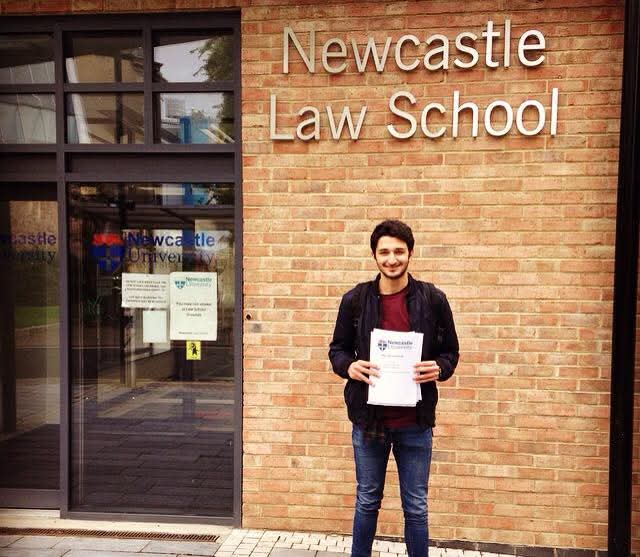
Then came the career dilemma every graduate knows. I had options, but I chose entrepreneurship. I had an idea for a booking platform for international student accommodation. I was first endorsed by Newcastle University, went through the UK’s entrepreneurship visa route, and scaled the business to 30 UK cities and hired a total of 13 people. When the pandemic hit in 2020, it took the business with it, a reminder that this can happen to any company. But for a first venture started at 22, I think I did alright.
Today I consult startup founders on global business mobility, including the UK’s Innovator Founder Visa. Everything below is built on firsthand experience, not theory. And that matters, because most people talking about this topic are really just trying to sell you something.
First, the legal reality about student visas that you can’t ignore
Before the exciting part, you need to understand your compliance obligations, the rules you are legally bound by.
I am not an immigration adviser. I’m a commercial consultant (the two overlap on entrepreneur visas, because you genuinely need commercial expertise either way). But there is one thing every international student should know, and far too many don’t:
On a UK student visa, you are generally not permitted to be self-employed or to act as the director of a limited company.
In practical terms, that means you cannot register and run your own business while on that visa. Student visas also restrict the hours and the nature of any work you do, typically capping working hours during term time.
This is the mistake to avoid at all costs. Violating your visa conditions can seriously damage your future, not only in the UK but potentially elsewhere, because future visa applications can ask about your immigration history. One slip can follow you for years.
For anything specific to your situation, refer to the official guidance on GOV.UK or speak to a regulated immigration adviser. I’m happy to point you toward one.
So where does that leave an ambitious student? It means the smart move is to prepare now and launch through the right route later. The main pathway for founders to build a business in the UK is the Innovator Founder Visa, which is my specialty and the focus of most of my content.
However, while you may not be able to trade, be self-employed or register a business, there are several things you can do if you’re an international student in the UK and want to start a business.
Here’s how to use this time well.
1. Build the skills university won’t teach you
Most of what you learn at university is theoretical. It doesn’t matter whether you studied entrepreneurship or biology, the practical skills of building a business usually aren’t on the syllabus. Placements and internships can help, but the responsibility to develop the real skills sits with you.
Two matter most at the start:
Analytical thinking — the ability to read a market, break down problems, and pinpoint the genuine pain points people experience.
Sales and communication — and I mean this literally, not as a CV cliché. How good are you at talking to people, persuading them, and holding their attention? This is genuinely difficult for many, and if it doesn’t come naturally, entrepreneurship will be hard, unless you’re the technical founder who builds while someone else sells. Either way, you can’t ignore it.
2. Be very careful who you listen to
Take advice from people who have actually built something and have a track record. Be wary of entrepreneurship advice from people who have never started a business, including, frankly, much of what circulates online. As I like to put it: if someone is such an expert on entrepreneurship, why are they in full-time employment?
That said, this isn’t about looking down on anyone. Not everyone can or should be an entrepreneur, and there’s nothing wrong with a full-time job. The point is simply to match the source of your advice to the result you’re after. And be especially sceptical of the “buy my course” crowd whose main business is selling you the dream rather than living it.
3. Start with real pain points
If you don’t have an idea yet, don’t worry, that’s a normal place to begin. The best starting point is to look for pain points and gaps. Not every business has to solve a problem, but problems are a brilliant place to start.
Begin with your own frustrations. What do you struggle with? Your own lived experience, as a student, as someone new to a country, as someone navigating systems that weren’t built for you, is often a goldmine of viable business ideas.
4.Build good contacts
Here’s a truth about doing business in the UK: it often isn’t purely about merit. It’s about who you know. The UK business world is highly relationship-driven, and compared to somewhere like the US, it tends to be more cautious about risk and new ideas. That means trust and referrals are frequently what get you through the door.
So invest in relationships early. Connect with people active in your industry, but also with people outside it who can open doors as you start and grow. The network you build now will matter more than you think later.
The bottom line
These are the things I wish I’d understood at 22, when I had the academics but none of the practical knowledge. It took me a decade to learn them the hard way.
Respect the rules, use your student years to build skills, relationships, and a sharp sense of the problems worth solving — and position yourself to launch properly through the right visa route when the time comes.
On a Graduate Visa?
If you’re currently in the UK on the Graduate Visa (also known as PSW), and thinking of switching to the Innovator Founder visa, the video below can be quite useful for you.


About | Business consultant and former tech entrepreneur. I moved to the UK alone at the age of 17 in pursuit of higher education. I scaled my business to over 30 UK cities, hired people and qualified for British citizenship through entrepreneurship. Today I help prospective and current founders launch and grow their businesses worldwide.