
Sohrab Vazir
Consultant | Founder | Global Citizen
Innovation and Startup Visas: A Comparative Overview

Startup visas have witnessed a considerable shift towards emphasising innovation. Traditionally, business and entrepreneur visas gravitated towards investment and job creation. However, this has changed with policymakers prioritising commercial innovation.
As a global business mobility consultant, I help founders explore their relocation options based on their concepts and unique personal circumstances. As such, I have extensive familiarity with startup visa schemes across the globe.
In this article, I will provide a comparative analysis of several startup visas. This piece aims to demonstrate the interpretation of innovation by looking at different startup visa policies.

The UK | Innovator Founder Visa
As a starting point, I will refer to the UK’s Innovator Founder visa.
This visa, and its predecessors, the Start-Up and Innovator visas, were the first pathways that I began working on. This was built upon my own experience navigating the UK’s business immigration landscape through scaling a technology start-up in my earlier years.
The UK Government’s guidance for endorsing bodies defines innovation as a product and/or service that:
- Differs from other existing products/services;
- Presents a strong unique selling point (USP);
- Creates strong barriers to entry and therefore is not easy to replicate by competitors.
The Innovator Founder visa offers some benefits to applicants and provides a (somewhat) clear definition of innovation. However, in my personal view, this interpretation presents various structural flaws. I have outlined these potential issues in a recent YouTube video, which you may see below:
Ireland | Start-Up Entrepreneur Programme (STEP)
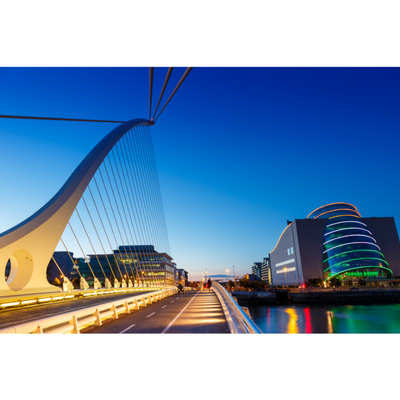
Ireland’s STEP pathway emphasizes innovation and the idea of “high-potential startups”. Nevertheless, it does not provide further and comprehensive details as to what precisely constitutes innovation.
While the innovation factor remains at the core of the STEP route, the visa policy also highlights job creation and global scalability potential.
The Netherlands | Start-Up Entrepreneur Programme (STEP)
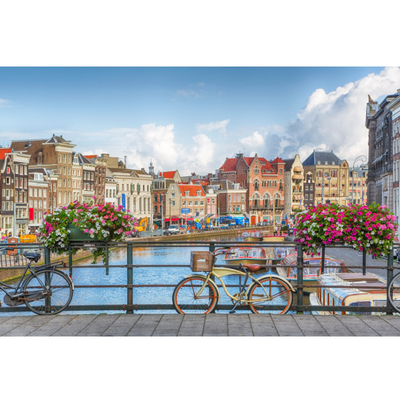
The Netherlands provides a more comprehensive and detailed description of what is deemed innovative.
What distinguishes the Netherlands from other startup visas is that it does not exclusively focus on the end product. This demonstrates a thought-through approach towards policymaking, as it acknowledges that many products/services will have existing competition.
The Netherlands defines innovation as the following:
- The product or service is new to the Dutch market.
- It involves innovative technology in production, distribution, or marketing.
- A novel organizational or process approach has been introduced.
Therefore, the Netherlands also defines innovation in terms of the means of production, rather than solely focusing on the end product.

Singapore | EntrePass
Singapore provides clear and stringent requirements for its visa scheme designed for entrepreneurs, the EntrePass.
One of the compulsory requirements for EntrePass eligibility is to have been backed by venture capital or the ownership of innovative technologies, most commonly patents.
While the EntrePass requirements may be strict, the key benefit lies in their clarity and setting a clear eligibility benchmark.
Final Remarks
While each startup visa has its unique eligibility criteria, a clear pattern is the emphasis on innovation. Founders considering startup visas ought to have a clear understanding of this fact and proceed accordingly.
Work With Me
If you are a founder exploring startup visas, I offer commercial consultancy services to entrepreneurs in a range of areas, including innovation management.
Get in touch today to discuss your case in detail.


About | I’m Sohrab Vazir, a UK-based business consultant and VC scout. At 22, while studying as an international postgraduate student, I launched a Property Technology (PropTech) startup with the backing of Newcastle University. I expanded the business to over 30 cities across the UK, built a team of four, and ultimately secured both Indefinite Leave to Remain and British citizenship through my entrepreneurial journey. Today, I support founders in navigating international business mobility and uncovering strategic growth opportunities.